The orbital layer that keeps Earth in view.
A continuously reconfiguring mesh at 1,450 km —
connectivity, sensing and analysis on one shell.
1,450 km, no seams
Sub-metre, day or night
The joint orbital venture of the Calyx group.
The Continuous Orbit
Orbital
Connectivity
Operators are placing tens of thousands of relay craft into low Earth orbit and moving the backbone of civil connectivity off the ground entirely. Aircraft, hulls, rolling stock and remote plant now expect the same latency budget as a fibre drop, anywhere on the sphere, at any hour of the day.
Aurora Link builds the layer that makes that ordinary — a continuously reconfiguring mesh of 1,450 km craft that hands a session between beams without the user ever seeing a seam.




Adaptive,
Phased-Array Aperture
A flat aperture that steers electronically rather than mechanically, so it can be bonded to a fuselage, a mast, a locomotive roof or a container lid without a radome or a moving part. Thickness is 41 mm; the array tiles outward in modules as a platform needs more gain.
Aurora Link tunes the same aperture family across low-orbit constellations, geostationary wideband and the hybrid handover between them — one panel, three orbital regimes, no re-pointing pause.
The Continuous Orbit
Layered, Always-On
Communication Payloads
A single orbital shell cannot serve every latency class at once. Coverage has to be assembled from tiers that talk to each other — low-orbit relays for responsiveness, wideband platforms for bulk, and an in-space fabric that routes between them without ever touching a ground gateway.
Aurora Link designs the three payloads that make that fabric possible: an Optical Cross-Link (OCL), an Adaptive Phased Aperture (APA) and an Edge Flight Processor (EFP) — the routing brain that decides, in orbit, where every packet goes next.
OCL : Optical Cross-Link
Laser terminals that pass traffic craft-to-craft in vacuum, so a session can cross an ocean without ever descending to a gateway.
APA : Adaptive Phased Aperture
Sixteen independently steered beams from one flat panel, re-tasked in under two milliseconds as platforms move beneath the footprint.
EFP : Edge Flight Processor
The routing brain of the shell — it re-plans the mesh on board, in flight, and never waits for a decision to arrive from the ground.
Instrument class
Planetary Sensing Service
Aurora Link flies the full sensing stack rather than a single instrument — visible-band optics, long-wave thermal, and synthetic-aperture radar — so a tasking request is answered by whichever physics can actually see through the conditions on the day.
Visible band, sunlit passes,
true colour at 0.31 m
VIS — panchromatic and multispectral optics, daylight tasking
Thermal band, through the
darkest part of the night
TIR — long-wave infrared, day and night, heat as the signal
Radar band, through cloud,
smoke and storm alike
SAR — synthetic aperture, all-weather, all-illumination
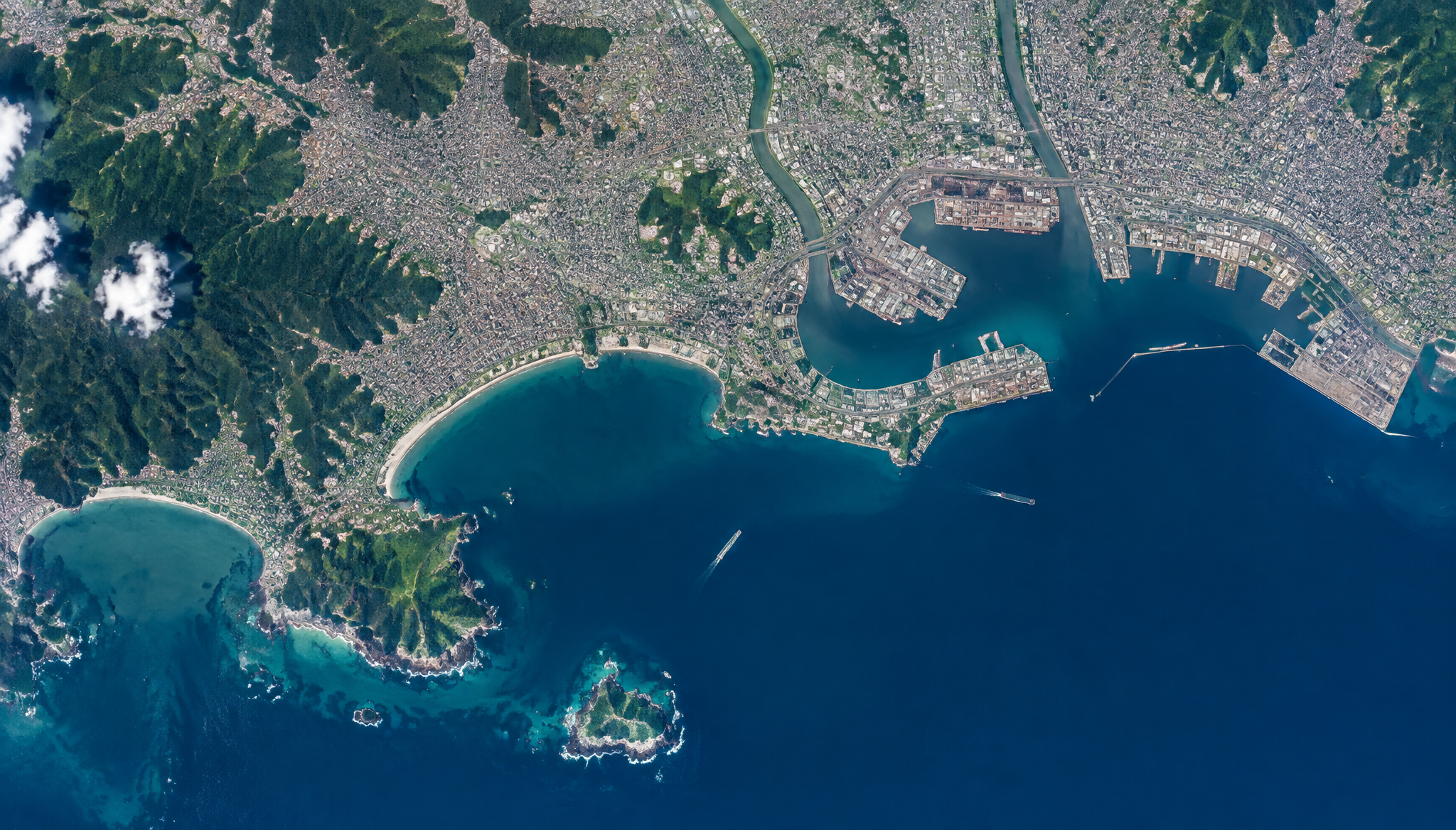

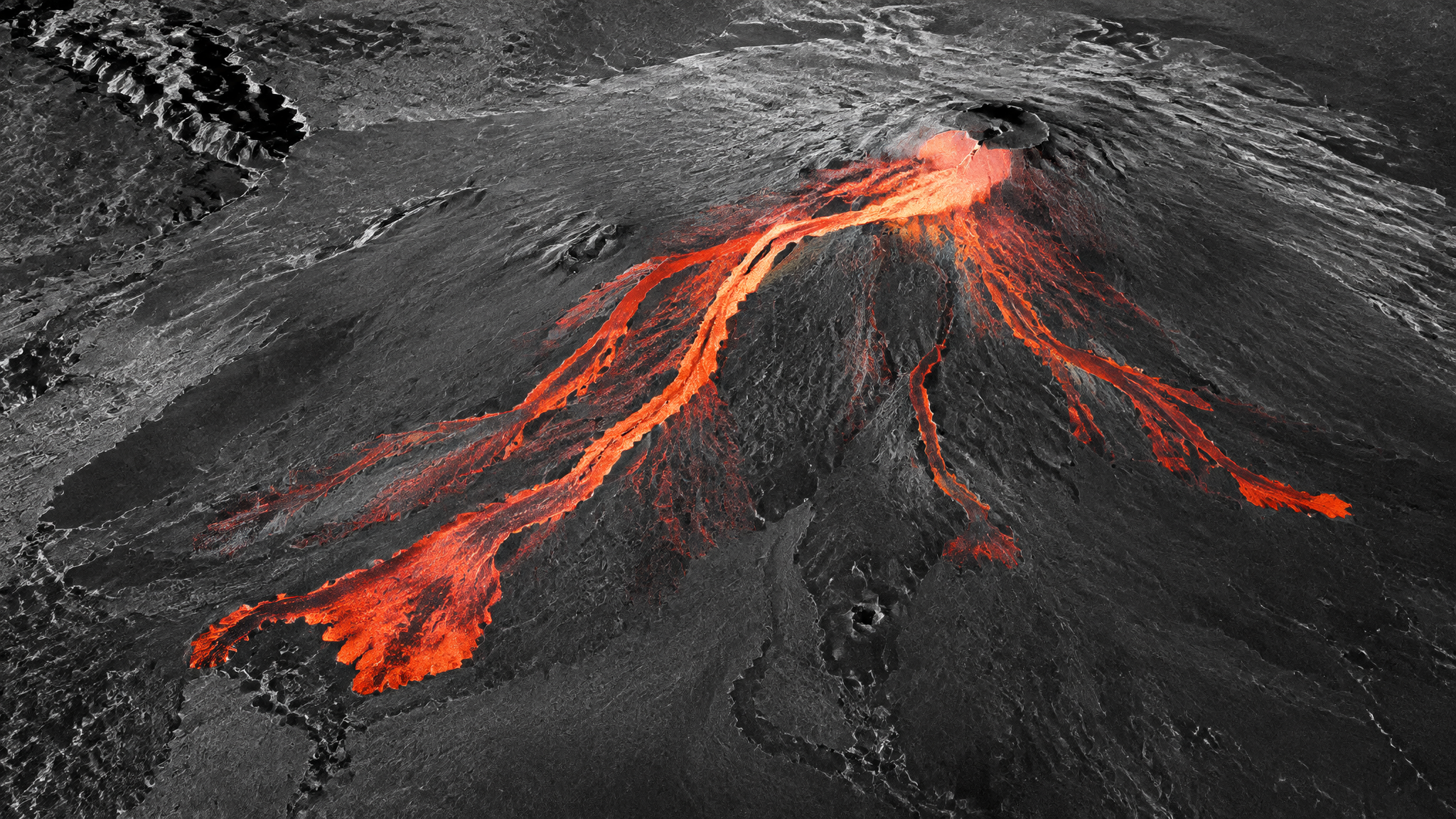
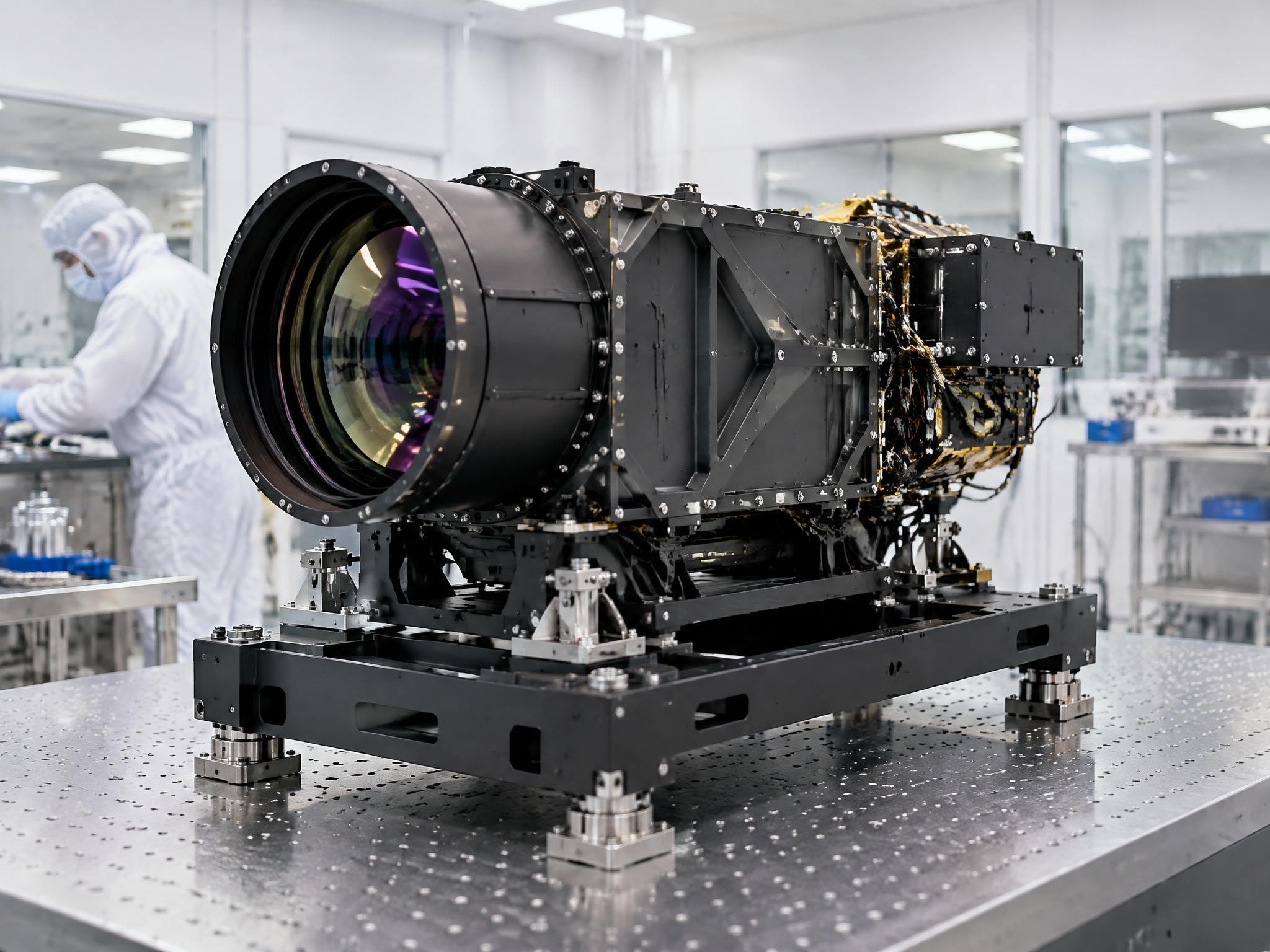
Fig. 01 — Skyframe-M optical bench, flight configuration
Optical payload
Skyframe Imager
A rigid, athermal optical bench with no moving focus element — the whole assembly holds alignment across a 180 K thermal swing, which is what lets a small bus hold sub-metre detail on a slewing pass.
The design descends from twenty-two years of airborne sensor work at Calyx. Its first orbital variant flew in 2023 and has since returned more than 4.1 million usable scenes without a single re-calibration campaign.
We continue to push the same bench toward wider swath and finer ground sampling, for orbit and for air.
Radar payload
Compact SAR Platform
Aurora Link is qualifying a radar spacecraft under 138 kg — light enough that a single mid-class launcher places nine of them into one plane, and cheap enough that a constellation can be replenished rather than repaired.
Bus and payload are one structure, not two. Folding the deployable antenna into the primary load path removed 31 kg and an entire separation mechanism, and because it images by radar it works at midnight, in monsoon, and through smoke — at 0.8 m resolution.
Northern Europe's largest satellite line
Halden Bay
Assembly Campus
On the outer shore of Halden Bay, the campus is the first privately held satellite production line in the region, built around a moving assembly cell rather than a set of static clean benches.
It carries integration and test under one roof: a 3,400 m² ISO-7 hall, a thermal-vacuum chamber rated to 4.2 m, an acoustic cell, a mission control annex and a space-environment qualification lab. Nameplate capacity is 120 spacecraft a year.

Machine geospatial intelligence
Orbital Data
Refinery
Raw scenes are not intelligence. The refinery grafts learned models onto the downlink so change is detected in the pass that observed it — encroachment, thermal anomaly, flood extent, berth occupancy, crop stress, infrastructure drift.
It turns the planet into a queryable record and its next state into a forecast — the part of the value chain that actually reaches the people paying for the orbit.
Close the loop
Always-on, self-aware network
The same shell that carries voice and telemetry now carries autonomy — extending to uncrewed mobility, sensor fleets and industrial edge estates, and generating the hyper-converged data layer that makes those systems answerable in real time.
We are building the orbital layer for a habitable century, with Aurora Link technologies, from the first pass onward.
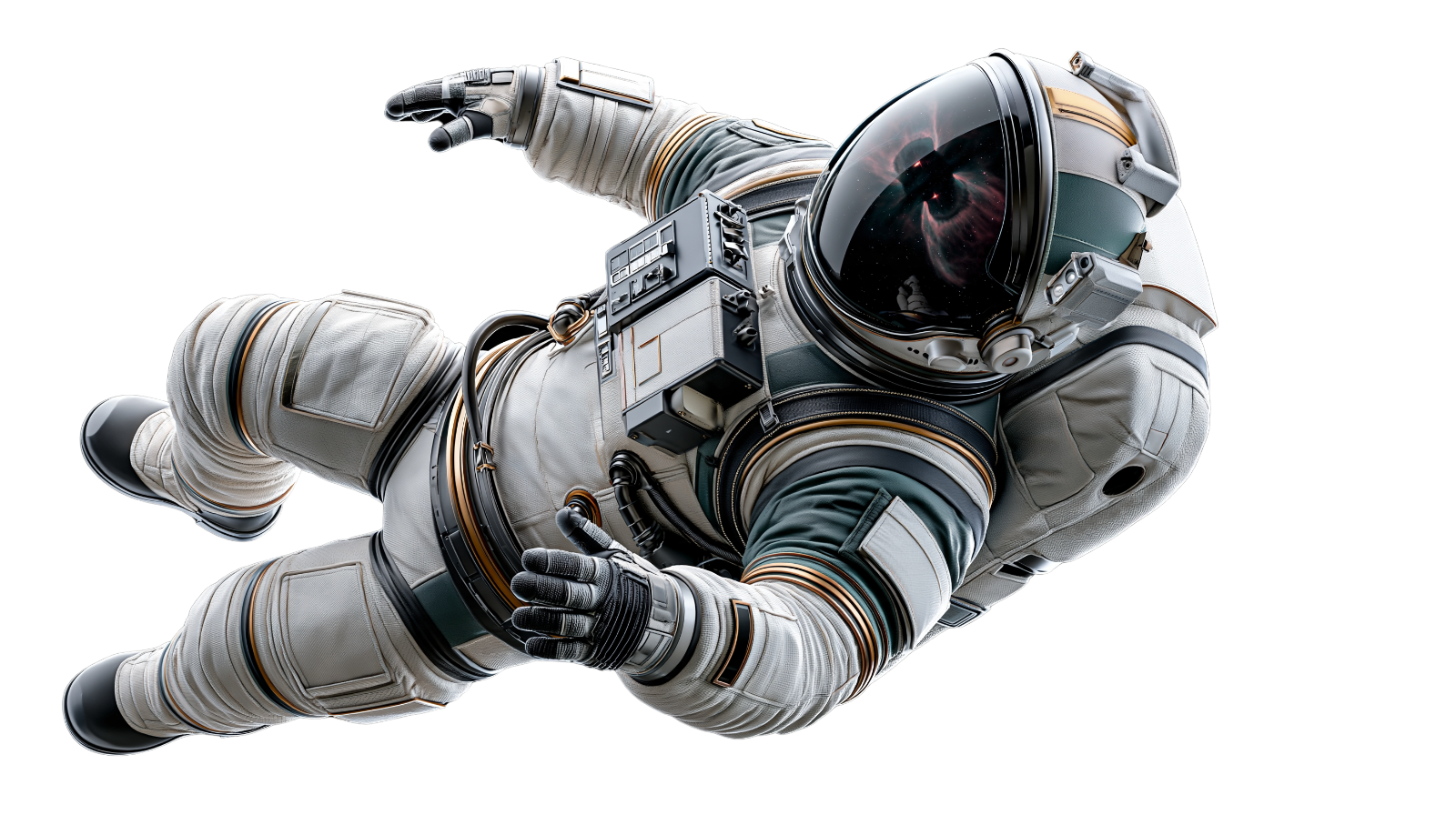
Probes we launched decades ago still send pictures home. We are going back to the Moon to answer what they could not.
Explore a sustainable future off-world.
Our first lunar orbiter, Vesper 1 , entered a 108 km polar mission orbit in 2025 — the ninth national programme to arrive intact — and has been surveying candidate landing terrain ever since.
Guide for the lunar orbiter
Orbiter Propulsion
System
Vesper 1 , launched in March 2025, flies a 108 km mission orbit for a two-year primary campaign, returning terrain, volatiles and radiation data. The propulsion knowledge accumulated in building and flying it feeds directly into the lunar descent module now in design.
Aurora Link — Monopropellant Bus · PWR 21.4 N
It is a single-propellant system: thrust comes from decomposing hydrazine across a catalyst bed. Because the transfer from Earth to the Moon needs constant, predictable thrust, the feed runs pressure-regulated, then switches to blow-down once the craft has captured into its target orbit.
Vesper 1 is the survey leg of a longer programme — its maps decide where the Meridian landings actually put their feet down.
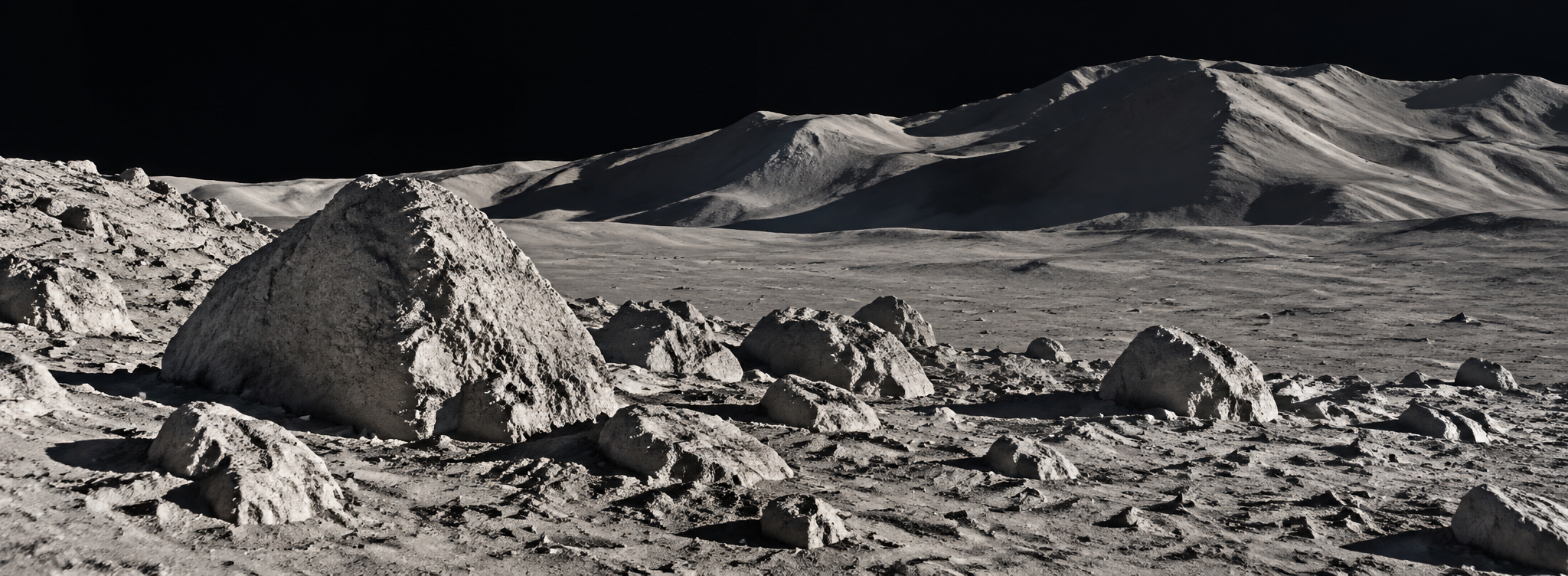
Living off what the
Moon already has.
Aurora Link has signed a joint programme with seven public research institutes to advance In-Situ Resource Utilisation — building the industrial base for the New Space age and knitting a domestic supply chain around it.
The work strengthens a shared platform rather than a single company: shared test articles, shared qualification data, shared risk.
Producing what a mission needs where the mission is. Water, breathable oxygen, photovoltaic feedstock, construction regolith and launch propellant — made on the Moon, on Mars, or on the way there, instead of carried.
Participation in the
Meridian Programme
The major spacefaring nations are executing detailed crewed exploration plans again, and competition now runs from the Moon to Mars.
The Meridian Programme is a crewed lunar effort to assemble a cislunar waystation and put four people on the surface — including the first woman to walk there.
Its stated end goal is Mars: a permanent crewed base on the Moon first, used as the proving ground and the staging point for everything after it.
Thirty-one states have now signed the Meridian Accords for international cooperation. Aurora Link's home nation became the fourteenth signatory in 2024.
Through that participation we are developing surface-utilisation technology and treating lunar operations as the stepping stone toward deep-space exploration, Mars included.
In this era of exploration Aurora Link will keep taking on the hard problems — and becoming a global leader in the industry through what it chooses to build.
Lift systems & access
Three ways onto
the shell.
Access is sold the way orbit actually works — by plane, mass and how much of the operation you want to keep. Indicative figures below are for a 550 km sun-synchronous insertion; anything outside that is quoted against the mission profile.
Rideshare
Shared plane, fixed manifest window, four launches a year.
- Up to 180 kg per slot
- SSO 550 km ± 25 km
- Standard separation ring
- Shared telemetry downlink
Dedicated
Your plane, your window, your dispenser geometry.
- Up to 1,150 kg to SSO
- Any inclination, any RAAN
- Custom dispenser & sequencing
- Dedicated ground pass allocation
Managed shell
We fly and replenish the constellation; you consume the service.
- Bus, payload, launch & operations
- Rolling replenishment cadence
- Refinery data products included
- 99.4 % contracted availability
Operator signals
“We stopped designing around coverage gaps. The handover between beams is now invisible to our flight-deck software, which means we deleted an entire fallback path from the avionics build.”
“The refinery flags berth occupancy before our own port systems do. Nine minutes from pass to alert has changed how we schedule pilots.”
“138 kilograms with a real radar on it changed the arithmetic for us. We replenish now instead of nursing a spacecraft through year eight.”
Mission questions
Before you
book a plane.
Rideshare slots run on a fixed quarterly manifest, so the practical answer is the next window with capacity — typically eleven to nineteen weeks. Dedicated missions average nine months from signature, of which about five are yours: bus integration, environmental test and the range paperwork.
Yes — that was the design constraint. At 41 mm the panel bonds to a conformal mount without a radome and without penetrating primary structure. Retro-fit kits exist for the four most common commercial airframes and for standard mast and container geometries; anything else needs a two-week fit survey.
Nothing visible. The Edge Flight Processor plans the handover in orbit and pre-positions the next beam before the current one degrades, so the transition is a re-point rather than a re-connect. Measured session continuity across a full pass is 99.94 %.
You own the tasked scene and every derived product from it. We retain the right to use anonymised detections to improve model performance, and you can opt out of that at contract stage without a price change.
Every Aurora Link bus carries enough propellant margin for a controlled de-orbit inside five years of end-of-life, and we will not manifest a customer spacecraft that cannot demonstrate the same. Debris posture is a launch condition, not a preference.
Research and civil-agency payloads fly on the same manifest under an academic rate. Two rideshare slots per launch are held for university and public-institute instruments and are allocated by a standing review panel rather than by price.
Next window
Tell us what you
need to see.
Manifest enquiries, aperture fit surveys and refinery trials all start in the same place. We answer inside two working days.